
Better Meetings: Don’t do this, do this instead
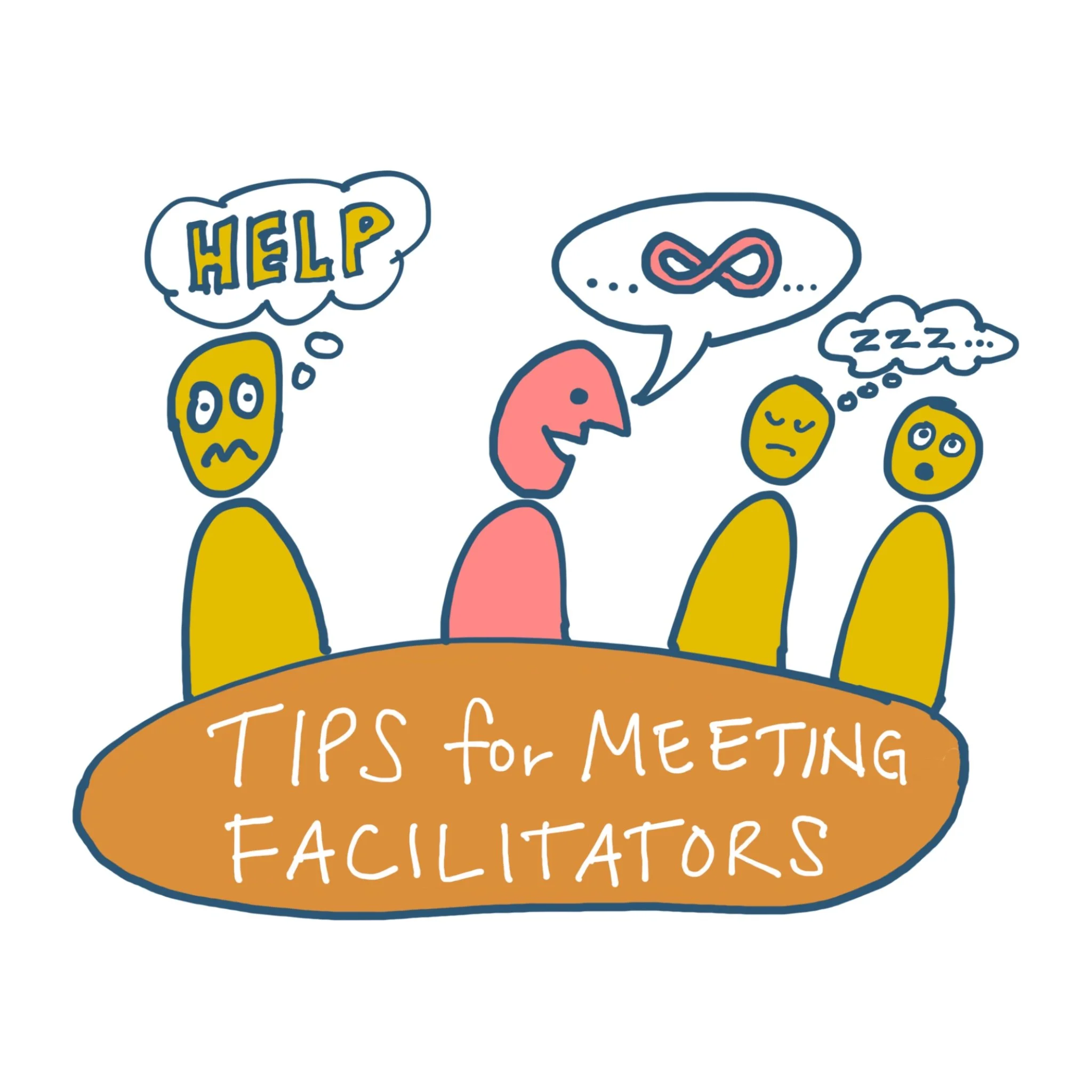
It is easy to get into a rut with meeting facilitation. It can start to feel like this: Topic, talk time, next topic, next talk time, run out of time, end of meeting, next meeting, topic, talk time, next topic, next talk time …
With intention, we can make meetings more productive and save precious time. We can have meetings that matter, that are exciting and carry work forward with momentum. And, one of my favorite opportunities from good meetings: Raise the level of positive connection and fun in a team.
Here are a few practical tips to use in the flow of a meeting. Pretend this is after you have done the good meeting hygiene steps ahead of the meeting itself, things like sending out the agenda ahead of time, establishing group agreements, and starting the meeting on time. (We all do all these things all the time, right? Right??)
Any one of these “do this instead” facilitation moves, when it becomes a habit for a group, is transformative. More than one, or all of these, is facilitation nirvana: No more dud meetings!
Don’t do this
Dive immediately into the first agenda topic. A meeting that starts this way can be hard to manage, because there is no agreement on the destination.
Do this instead
Start meetings by asking for agreement on the topics for this meeting, and, crucially, the goal for each topic. “Project Z” = topic but no goal. “Decide team roles and major deadlines for Project Z” = topic AND goal.
Don’t do this
Read aloud a bunch of text that everybody can read for themselves. This is boring, time-consuming, and can even feel like an insult to people’s intelligence.
Do this instead
If you have paragraphs of text to deliver, or even if it’s 4 bullet points on a slide, you can either summarize it for people out loud as they scan the text, or (my favorite) give people a few minutes to read silently, then the group can discuss.
Don’t do this
Allow someone to talk off-topic, at length. It can be awkward to redirect someone who is talking a lot. And we need to redirect people every now and then, out of respect for people’s time and our meeting goals.
Do this instead
Say “Let me pause you, please. Can you help me understand the connection to our current agenda topic?” Or “I need to interrupt, sorry. We hear you. I think we want to hear what other people think.”
Don’t do this
Allow relevant comments to get lost as the conversation continues. Relevant comments are those that connect clearly to the topic at hand, and the meeting’s goals for that topic.
Do this instead
Connect the dots and recognize good contributions to the goals of the meeting. “I want to circle back to Ana’s comments.” or “Your idea sounds like the answer we are looking for.” This helps the group meet the meetings’ goals, and also shows supportive, humble leadership.
Don’t do this
Worry helplessly about how much time the group is spending in discussion, without getting to all agenda topics the group planned to discuss. Then after the meeting when the group has to wait to talk about one or two topics, we sigh and think, yet again, “Yep, I knew that was going to happen.”
Do this instead
Assign someone to be the time-keeper, and ask that person to help with timechecks, out loud or in virtual meeting chat. If the discussion is going great, you can change the agenda and timing: “We are taking longer than we thought for this. Do we want to leave another topic for later, or try to wrap this up quickly?”
Don’t do this
Discuss agenda topics until (or after) the meeting’s end time, leaving no time to review decisions and action items. This makes it hard to ensure follow-through after the meeting, and to ensure everyone has a shared understanding of what happened.
Do this instead
Protect 5 minutes or more at the end of the meeting to review what happened, and what needs to happen next. Document the decisions, action steps, outstanding questions, agenda topics for next time, and whatever else the meeting produced. As the clinical health care cliche goes, if it’s not written down, it didn’t happen.